Why Do People on TV or in Movies Sound So Bad?
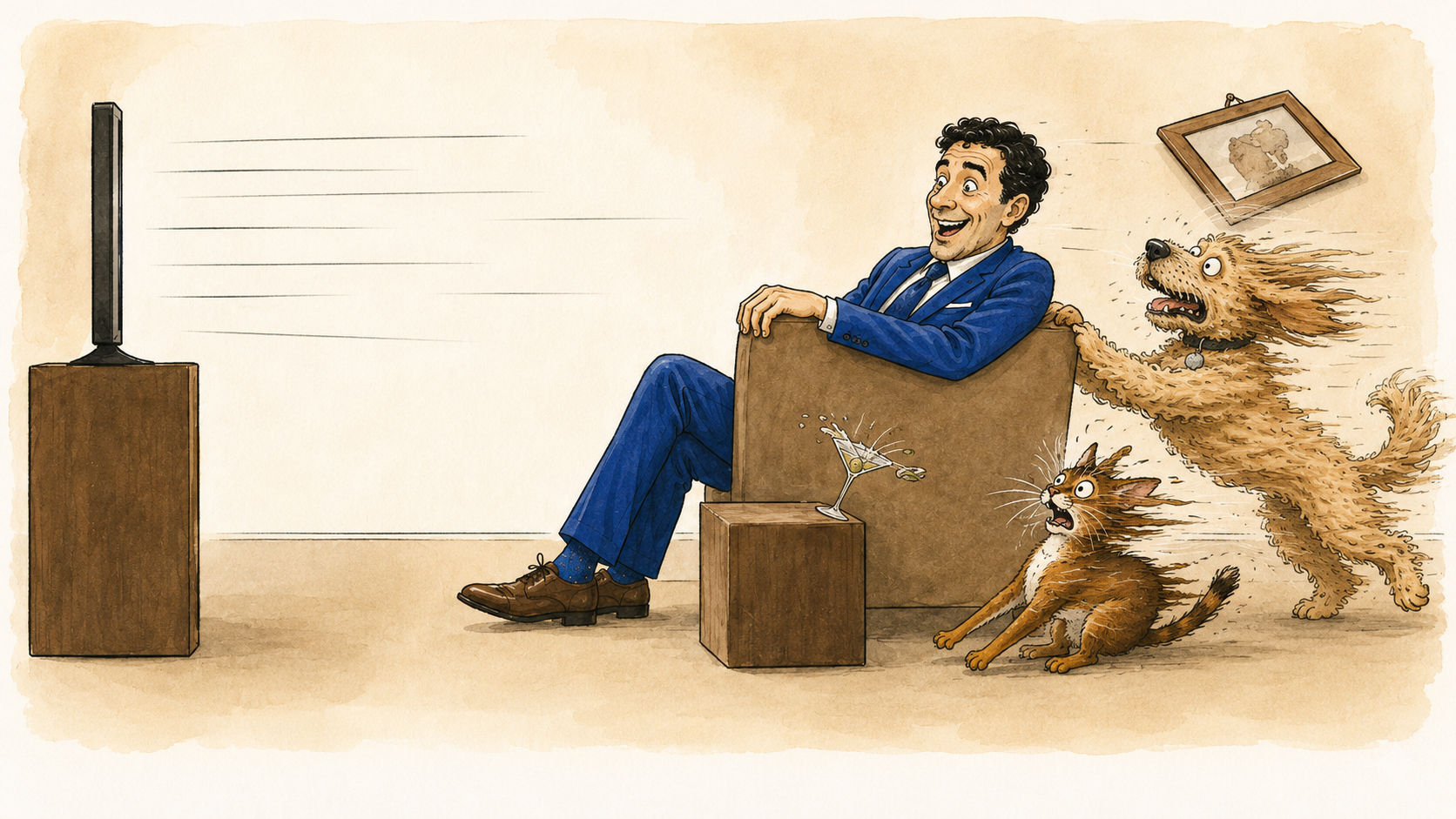
Be blown away by our hearing aids and not the TV!
This is a question I hear quite often in clinic.
People will say things like, “That person doesn’t sound very clear,” or “The background noise is terrible,” or they assume the issue must be the speakers on the TV itself. What is interesting is that this is often one of those moments where we are actively listening, rather than just hearing. Once we start paying attention, the problems become much more noticeable.
In reality, difficulty understanding speech on TV or in movies is rarely caused by a single issue. It is usually the result of several factors working together. Below are the most common reasons this happens, along with practical solutions.
1. The Speakers in Modern TVs
TV speakers are highly variable, and with modern televisions becoming thinner and more minimalist, speaker performance is often compromised. Many TVs are designed to be wall-mounted or recessed into cabinetry, which leaves very little space for quality speakers.
Smaller speakers mean smaller drivers and less powerful amplification. This reduces overall output, limits bass, and restricts high-frequency detail, which is critical for speech clarity. Another common issue is directionality. TV speakers often fire downward or backwards rather than directly towards the listener.
A simple first step is to explore your TV’s sound settings. Most televisions allow adjustments to treble and bass, and many include speech-enhancement or clear voice modes. These features can make a noticeable difference.
If this is not enough, upgrading the audio output is often the next step.
2. Soundbars, Home Theatre Systems, and TV Headphones
A soundbar is one of the most common and effective upgrades. Soundbars contain multiple speakers that spread sound more evenly across a room and are often paired with a subwoofer. The subwoofer provides better low-frequency extension, which improves fullness without overwhelming speech.
For most people, a soundbar results in clearer dialogue and a more comfortable listening experience.
Other options include full home theatre systems such as 5.1 surround sound, or TV headphones. TV headphones transmit sound directly from the television to the listener, which means excellent clarity regardless of where you sit.
The downside of TV headphones is that they isolate you from the rest of the room. This makes conversation difficult and increases the risk of missing important sounds such as a phone ringing or an alarm. For some people this trade-off is acceptable, but for others it is not ideal.
3. Room Acoustics
Room acoustics are often underestimated.
In my previous home, we had a dedicated TV room with carpet, curtains, couches, and plenty of soft furnishings. When we installed a new flat-screen TV, the sound was excellent from almost anywhere in the room.
When we moved into our current house, the floors were concrete and there were far fewer soft furnishings. We installed the same TV in a similar-sized room and the sound quality was dramatically worse. The solution was not the TV. It was the room.
Hard surfaces reflect sound, increasing reverberation and reducing speech clarity. Adding rugs, curtains, fabric furniture, or acoustic panels can significantly improve how clear dialogue sounds.
4. Hearing Loss
From a clinical perspective, this is one of the most important factors.
The most common difficulty associated with hearing loss is reduced speech clarity. Regardless of the type of hearing loss, people often first notice difficulty hearing soft speech or understanding speech that varies in volume.
Movies and TV programmes frequently include wide dynamic ranges, with quiet dialogue followed by loud music or effects. This makes speech harder to follow, particularly if a speaker has a softer voice.
Hearing loss also reduces the ability to understand speech in background noise. TV shows and movies often include music, ambient sound, or effects layered under dialogue. This overlap makes speech significantly harder to understand, especially when hearing loss affects the same frequencies used for speech.
5. Accents, Production Choices, and Audio Mixing
With modern streaming services, we are exposed to TV shows and movies from all over the world. Even when the language is English, accents vary widely.
Accents change the timing and emphasis of speech. When you are not accustomed to an accent, it becomes harder to predict what someone is saying. This effect is amplified if you already have hearing loss.
Modern production also prioritises realism and atmosphere. Dialogue is often mixed lower than background music or effects to create mood. While this sounds cinematic in a studio, it can be challenging to understand at home.
One of the simplest and most effective solutions is subtitles. Most streaming platforms allow subtitles in English, even when the programme is already in English. Subtitles provide visual cues that support understanding and reduce listening effort.
6. Hearing Aids and TV Streaming Technology
For people with hearing loss, hearing aids play an important role in improving how speech sounds on TV.
Modern hearing aids are designed to prioritise speech and amplify soft sounds. When these work together, they can significantly reduce the impact of hearing loss. In most cases, I would expect a noticeable improvement in speech understanding when someone wears their hearing aids while watching television.
However, for some people, hearing aids alone are not always enough. This is where hearing aid accessories can make a substantial difference.
Many hearing aids can connect to a TV streamer that plugs directly into the television. This allows the TV audio to be streamed straight into the hearing aids. In my experience, this is often the optimum solution for people who struggle to hear TV clearly.
Because the sound is transmitted directly, it bypasses the acoustics of the room entirely. The signal is then processed by the hearing aids and customised specifically to your hearing loss. The result is clearer speech with less effort and far greater consistency.
Another major advantage is that TV streaming through hearing aids does not isolate you from the rest of the world. You can still hear important sounds such as a phone ringing, a fire alarm, or someone speaking to you. This allows you to watch TV clearly while still participating in conversation and remaining aware of your surroundings.
Bringing It All Together
There are many reasons why TV and movie dialogue can sound unclear, and just as many possible solutions.
Sometimes the answer is as simple as adjusting your TV settings. For others, it may involve improving audio output with a soundbar, changing room acoustics, addressing hearing loss, or using assistive listening technology alongside hearing aids.
If you are struggling to hear the TV, or if watching television feels like hard work, do not hesitate to get in touch. Whether it is adjusting your setup, assessing your hearing, or finding the right accessories, we can work through the options together and find the best solution for you.