Why Do Hearing Aids End Up in the Drawer?
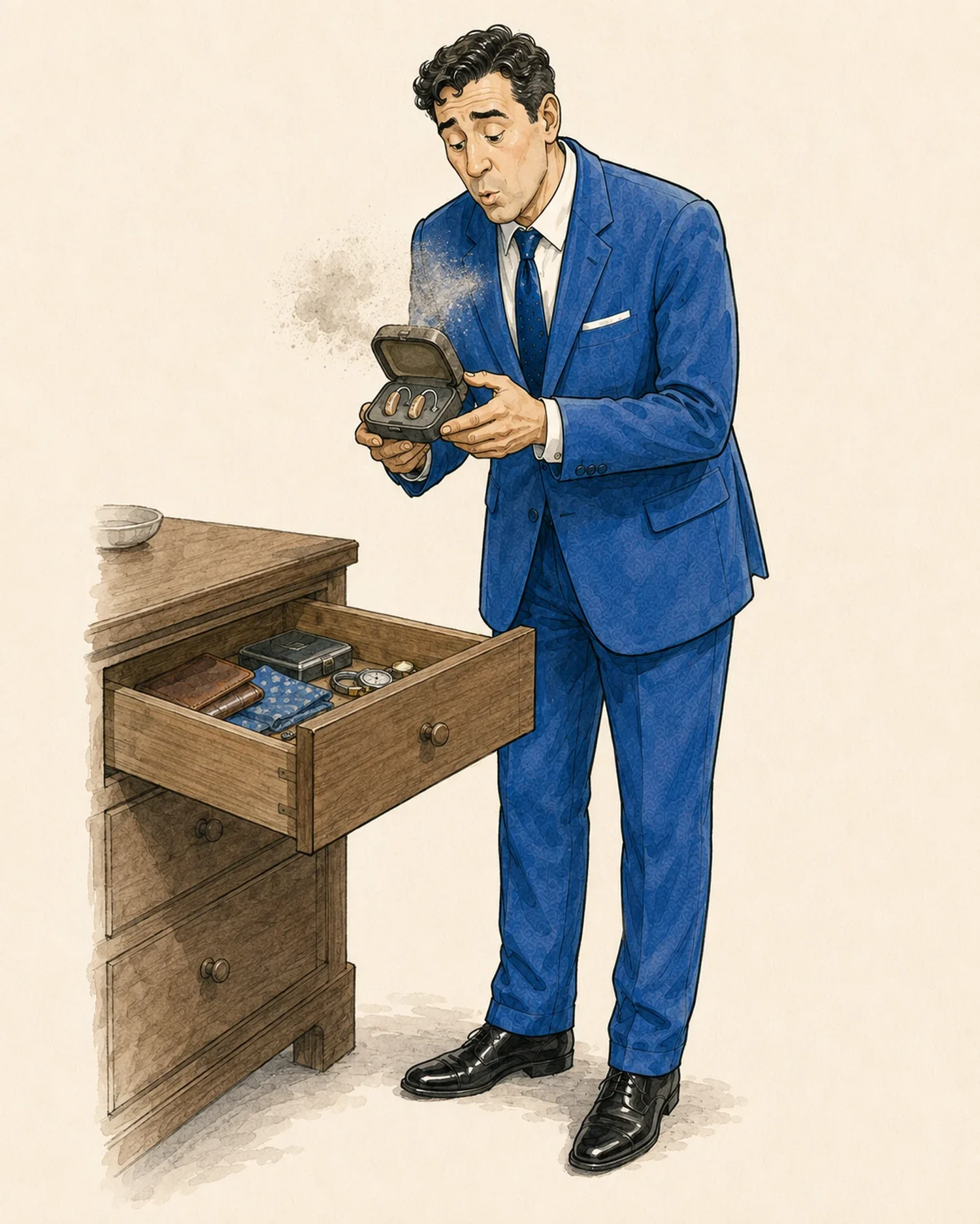
Nearly everyone I meet knows someone with a set of hearing aids living in a drawer. Sometimes it is a parent, sometimes a neighbour, and often enough it is the person sitting in front of me telling me about the last pair before we talk about anything else. The story usually runs the same way, in that the aids were fitted, they never quite sounded right, the person went back once or twice and was told to persevere, and eventually they came out only for family gatherings and then not at all.
It is easy to read a drawer full of hearing aids as proof that hearing aids do not work. I would put it differently. A drawer is evidence that the fitting failed the person rather than that the technology failed, and the difference between those two things matters, because one of them is fixable in an afternoon and the other is not.
The numbers are worse than most people realise
This is not a rare outcome or an unlucky few. National household survey data collected across fifteen years and tens of thousands of adults tells a consistent story, which is that roughly one in five people who have been fitted with hearing aids do not use them at all, around three in ten use them some of the time, and only about half wear them most of the time.
Put plainly, only one in two fittings genuinely succeeds. That is a remarkable figure for a health intervention that people pay several thousand dollars for, and it is not talked about nearly enough within my own profession. What makes it worse, and also what makes it worth writing about, is that the reasons behind it are well known, thoroughly ordinary, and nearly always correctable.
There are five I see more than any other. For each one I have set out what it actually means and the exact thing to ask for, because knowing the right question to put to your clinic is most of the work.
1. They were never tuned to your prescription
Every hearing loss has a target. Based on your audiogram there is a specific amount of amplification your ears need at each pitch, and that target is calculated using a prescription formula that has been validated across large populations. Getting close to it is what separates a hearing aid that helps from a hearing aid that is merely on.
The only reliable way to know whether an aid is meeting that target is to measure the sound inside your own ear canal while you are wearing it, using a thin probe microphone. Every ear is a slightly different shape and volume, so the same hearing aid on the same settings produces meaningfully different sound in two different people. A great many fittings are done on the manufacturer's default settings alone, with no measurement at all, and the person is then asked how it sounds and adjusted on impressions rather than evidence.
What to ask for: ask whether real ear measurement was carried out at your fitting, and if it was not, ask for it. It takes about fifteen minutes, and of everything you can request of a clinic it is the single most valuable.
2. The wrong hearing aid was recommended
A hearing aid should be chosen around your ears, your dexterity, the listening situations that actually matter in your life, and your budget. Physical shape comes into it, as does whether you can manage a small battery door, whether you wear glasses, how much wax you produce, and whether the difficulty you want solved is the television at home or a noisy restaurant once a week.
Where a clinic carries only one or two manufacturers, the recommendation is shaped by the shelf rather than by your ears, and in New Zealand that decision then follows you for some time, because government funding is generally tied to a six year replacement cycle. A recommendation made for the wrong reasons is therefore not a small thing to correct later.
What to ask for: ask how many manufacturers the clinic works with, ask specifically why this model was chosen for you rather than another, and ask what the exchange policy is if it turns out not to suit.
3. They are difficult to manage, and nobody showed you how
Wax filters block, domes perish and go hard, chargers get left in the wrong room, and microphone ports fill with dust until the sound goes thin and dull. None of this is difficult once you have been shown on your own aids, but a surprising number of people are never shown properly, so an aid that has gone quiet reads as an aid that has failed, and into the drawer it goes.
The upkeep itself is genuinely small. Nothing on the list below takes more than a minute, and none of it requires good eyesight or steady hands once someone has shown you the trick of it.
Charge them every night
Wipe the microphone ports weekly
Change the wax filters monthly
Replace the domes every few months
Bring them in for a clean and check with us every six months
That comes to about five minutes a week for a device you have invested a good deal in.
What to ask for: ask to be taught the routine on your own hearing aids rather than on a demonstration model, and ask to leave with spare filters and domes in your hand. Then ring your clinic on the day one goes quiet rather than waiting for the next scheduled appointment.
4. They are physically uncomfortable
Sore canals, whistling every time you hug a grandchild, a mould that has stopped fitting as the ear has changed shape over the years, or an aid that sits badly against the arm of your glasses. These sound like minor irritations, and that is exactly why they become permanent, because people feel awkward raising something so small and instead leave the aids out for a day, then a week, and then for good.
I would rather hear about a mildly sore ear in the first fortnight than lose a patient to it silently in the first year.
What to ask for: new moulds, a different dome size or style, or an honest conversation about whether this is the right style of aid for you at all. Comfort problems are a clinical failure on our side rather than something you are supposed to get used to.
5. You still cannot follow conversation in a noisy room
This is the one I have to be honest about. Hearing aids restore audibility, meaning they make quiet sounds available to you again, but they cannot fully restore the brain's ability to pull one voice out of many, which is a separate task that becomes harder with age and with long-standing hearing loss. A perfectly tuned, perfectly fitted pair of hearing aids can still leave a busy café hard work, and if nobody explained that at the outset, it feels like the aids have failed when in fact they have run into the limits of what any device can do.
There is still a great deal that can be done, and expectations set properly at the beginning prevent most of the disappointment that follows.
What to ask for: directional and noise programs set up correctly for the places you actually go, a remote microphone or a television streamer for the situations that matter most to you, and a frank conversation about what the technology will and will not deliver in noise.
Bring in the pair that stopped being worn
If any of the five sounded familiar, the aids in the drawer are worth another look before you write off the money or the idea altogether.
I am happy to see any brand, of any age, fitted by anyone. We will measure the tuning against your prescription, check the physical fit, and tell you honestly whether they are worth persevering with or whether they have genuinely reached the end of their working life. The appointment takes thirty minutes, there is no charge for it, and there is no obligation to buy anything at the end.
If you are not sure which of the five applies to you, that is precisely what the appointment is for. Bring the aids in and we will work it out together.